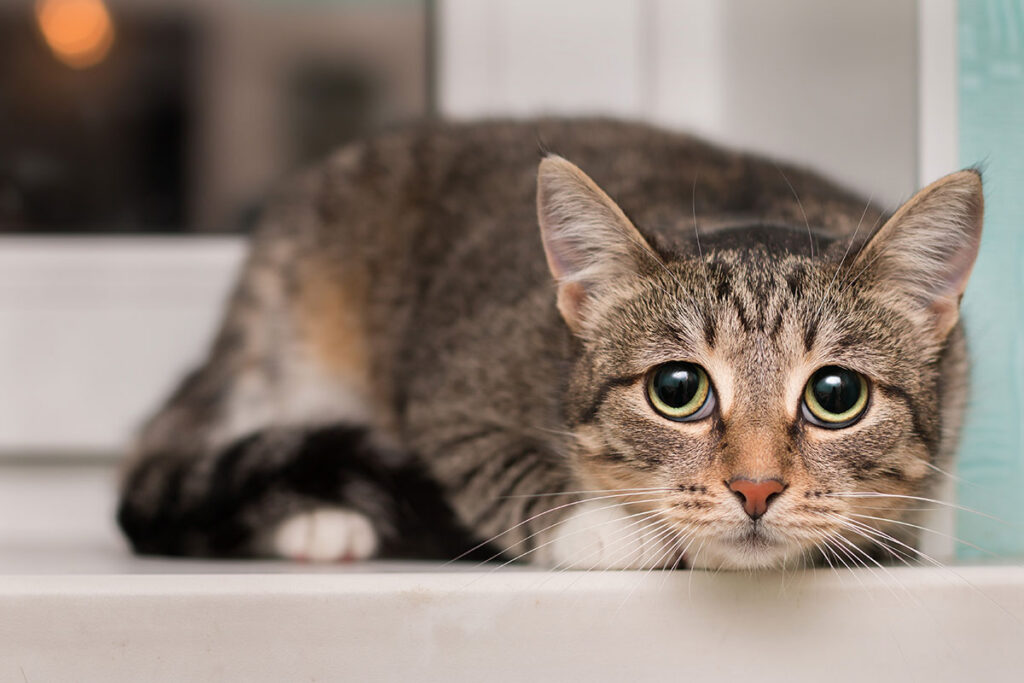
Anxiety in cats describes a state of fear, stress, or worry that affects a cat’s behavior, body language, and overall health. Cats with anxiety often react to changes or unfamiliar situations in ways that seem out of character, such as hiding, avoiding interaction, or acting defensively. Anxiety can develop gradually or appear suddenly after a stressful event. At Dix Hills Animal Hospital in Huntington, NY, we work with families to identify what may be causing anxiety in cats and help them feel more secure in their environment. Understanding the signs and triggers allows you to take practical steps that support your cat’s emotional well-being.
Signs of Cat Anxiety
Cats with anxiety communicate distress through physical and behavioral changes. Some signs appear subtle at first, while others feel more urgent. Recognizing these signals early helps prevent ongoing stress from affecting appetite, sleep, and litter box habits. Anxiety can also show up during routine activities like grooming, play, or mealtime.
Common signs of cat anxiety include:
- Hiding more often or avoiding family members
- Sudden aggression or swatting without a clear cause
- Excessive grooming that leads to hair loss
- Vocalizing more than usual
- Changes in appetite or weight
- Urinating or defecating outside the litter box
These behaviors do not always mean a cat has anxiety, but they signal that something in your cat’s world feels overwhelming. A veterinary evaluation helps rule out medical conditions that can look similar to cat anxiety.
What to Do When Your Cat Is Anxious or Scared
If you notice signs of anxiety in your cat, respond calmly and avoid forcing interaction. Sudden movements, loud voices, or attempts to pick up a frightened cat can intensify fear. Give your cat space while also ensuring they have access to familiar items like bedding, food, and water. Predictable routines often help cats with anxiety feel safer.
Try these supportive steps when your cat seems anxious:
- Lower noise levels in the home
- Provide quiet hiding spaces
- Keep feeding and play times consistent
- Limit exposure to stressful triggers when possible
- Use gentle, slow movements when approaching
These actions do not replace professional guidance, but they create a calmer environment while you seek veterinary advice.
Causes of Cat Anxiety
Cat anxiety often develops in response to environmental, social, or physical changes. Even small disruptions can feel significant to a cat that thrives on routine. Moving to a new home, introducing a new pet, or changes in household schedules may all contribute to anxiety in cats. Past negative experiences can also shape how a cat responds to unfamiliar situations.
Environmental Changes
Cats depend on stable surroundings. Renovations, rearranged furniture, or new smells can make familiar territory feel unpredictable. Outdoor cats that transition indoors may also struggle to adjust, which increases stress levels.
Social Stressors
Conflicts with other pets, lack of safe spaces, or unfamiliar visitors can create ongoing tension. Cats with anxiety may avoid shared areas or become more defensive when they feel crowded or threatened.
Health-Related Factors
Pain, illness, or sensory changes can make a cat feel vulnerable. When a cat does not feel well, they may withdraw or show behaviors linked to anxiety. A veterinary exam helps determine whether physical discomfort plays a role.
How Do Vets Determine the Cause of Cat Anxiety?
Veterinarians use a thorough approach to understand why a cat may be anxious. The process begins with a detailed conversation about behavior changes, home routines, and recent events. We assess body condition, mobility, and overall health to identify physical contributors. Diagnostic testing may help rule out conditions that affect behavior.
We also evaluate the home environment and social dynamics. Understanding interactions with other pets, daily schedules, and sources of stimulation provides context for cat anxiety. This comprehensive view allows us to separate behavioral concerns from medical issues and recommend the next steps.
How Do You Reduce Anxiety in Cats?
Treatment for anxiety in cats focuses on reducing stress, increasing predictability, and addressing any underlying health concerns. Every cat responds differently, so plans often combine several strategies. Ongoing communication between pet owners and the veterinary team helps track progress and make adjustments.
1. Maintain Consistent Routines
Feed, play, and interact with your cat at the same times each day. Predictability lowers uncertainty and helps cats with anxiety feel more in control of their environment.
2. Create Safe Retreat Areas
Provide elevated perches, enclosed beds, or quiet rooms where your cat can retreat. Safe spaces allow cats to self-soothe when overwhelmed.
3. Enrich the Environment
Mental stimulation supports emotional health. Puzzle feeders, climbing structures, and interactive toys encourage natural behaviors that reduce stress.
4. Encourage Positive Associations
Pair new experiences with gentle praise and familiar comforts. Gradual exposure helps reduce fear linked to specific triggers.
5. Reduce Inter-Pet Conflict
Separate feeding areas and litter boxes, and ensure multiple resting spots. Giving each pet access to resources decreases tension.
6. Support Calm Handling
Move slowly and respect your cat’s signals. Gentle handling builds trust and helps prevent defensive responses.
7. Use Visual Barriers When Needed
Block access to windows or areas that trigger stress, such as outdoor animals. Limiting visual stressors can lower overall anxiety levels.
8. Schedule Regular Veterinary Visits
Routine exams help detect health changes that may influence behavior. Ongoing care supports both physical and emotional wellness.
9. Provide Structured Play Sessions
Interactive play burns energy and builds confidence. Short, daily sessions help anxious cats release tension safely.
10. Monitor Progress Closely
Track behavior changes over time and share updates with your veterinary team. Early adjustments keep small issues from escalating.
Support Your Cat’s Emotional Health Today
Anxiety in cats can feel overwhelming, but supportive strategies and veterinary guidance make a meaningful difference. If your cat shows signs of anxiety or sudden behavior changes, contact Dix Hills Animal Hospital in Huntington, NY, at (631) 271-8383 to discuss your concerns or request an appointment online. Early attention helps your cat feel more comfortable and secure in daily life.